




Harmful Algal Blooms
RSC Involvement in Harmful Algal Bloom Monitoring and Research
The RSC collaborates with the Erie County Department of Health, the Department of Conservation of Natural Resources, and the Pennsylvania Department of Environmental Protection to monitor for harmful algal blooms. The RSC samples more than 33 locations along the Lake Erie Shoreline including Presque Isle State Park and Presque Isle Bay once per week from Memorial Day to Labor for algal toxins. The toxin concentrations at each location are posted to our online HAB Map and relayed to ECDH, DEP, Erie Western PA Port Authority and DCNR park managers which, in turn, post advisory signs at necessary locations. The RSC monitors a variety of algal concentrations in real-time using probes outfitted on the Beach 2 buoy and Nearshore Buoy which can be found at the RSC buoy website: www.PALakeErieBuoy.com. The RSC has previously worked with local veterinarians to provide training on recognizing HAB poisoning in pets. Thanks to PA Sea Grant for compiling the following information, which is also found here.
Local HAB Advisories
Current HAB results can be found on our Local HAB Advisories page which is updated weekly based on analysis of water samples at each location.
Our Results
Take a look at our results for the 2025 season here.
What are algal blooms?
Algae are tiny organisms that are found in water, Most types of algae are beneficial; they produce oxygen and food for animals that live in water. However, when conditions are favorable, algae can produce algal blooms. Algal blooms occur when algae grows in large, dense populations, and the favorable conditions under which they bloom include increase in water temperature and available nutrients. Large blooms, even non-toxic ones, can affect ecosystem health. Some blooms create dead zones as massive amounts of algae die and bacteria decompose the organic matter. As they decay, they deplete the oxygen in the water, and fish and other organisms can’t survive.
Cladophora and other forms of algae can produce thick mats that are not aesthetically pleasing and are considered a nuisance to local communities. The “muck” zones can harbor bacteria that can lead to beach closures. However, they do not produce algal toxins. In summer months when blooms die, Cladophora mats float to the surface, and wind and wave action causes them to wash up on the shorelines where they decay.
What are harmful algal blooms?
Harmful algal blooms, or HABs, are caused by blue-green algae that produce toxins. Although the name implies algae, they are technically a type of bacteria called cyanobacteria. These microscopic organisms grow quickly, or bloom, when the water is warm, stagnant, and full of nutrients. Blooms usually occur during the summer and fall but occur at anytime during the year. When they produce toxins, these blooms can become dangerous. Even after visible blooms subside, the toxins may still be present in the water.
HABs have been observed worldwide, including Lake Erie and other Pennsylvania waters, and can occur almost anywhere: lakes, ponds, storm water retention basins, rivers, streams, or reservoirs. These blooms are generally characterized by surface scums that resemble spilled paint or pea soup. They are often green or blue-green, but may be brown, black, white, purple, or red. Swallowing or contact with affected water or scum can cause serious illness, especially to dogs and other domesticated animals.
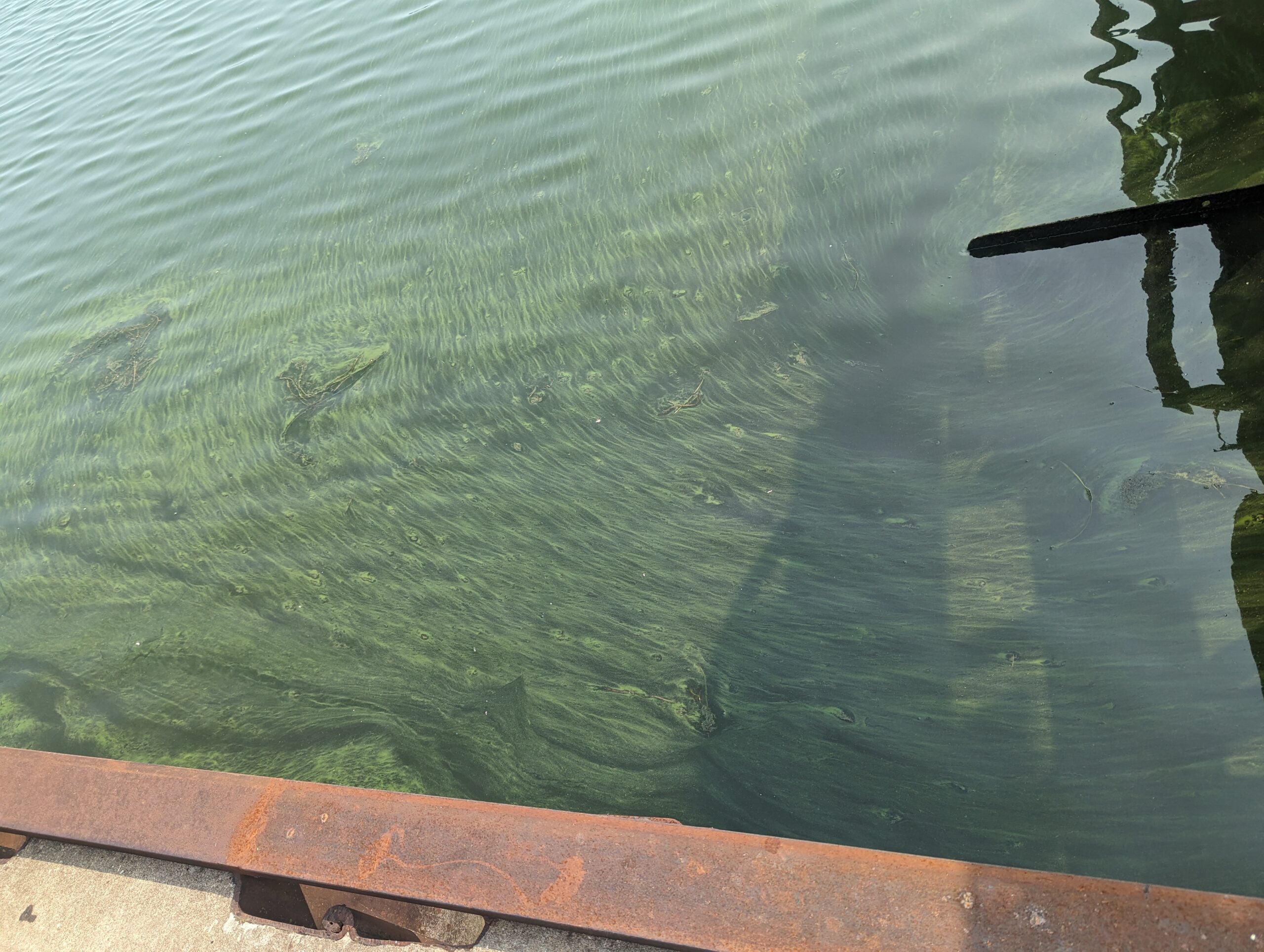 HAB blooming at PISP Marina in summer of 2025.
How will I know if there is a HAB?
Look for posted HAB advisory signs or ask a park manager about any recent HABs because colorless toxins can remain in the water after visible blooms fade.
Confirmation of HABs can only be made under a microscope, with a field test kit, or with a laboratory test kit. HABs generally occur from late summer into early fall when the water temperatures are warmest and an abundance of sunlight and nutrients are available.
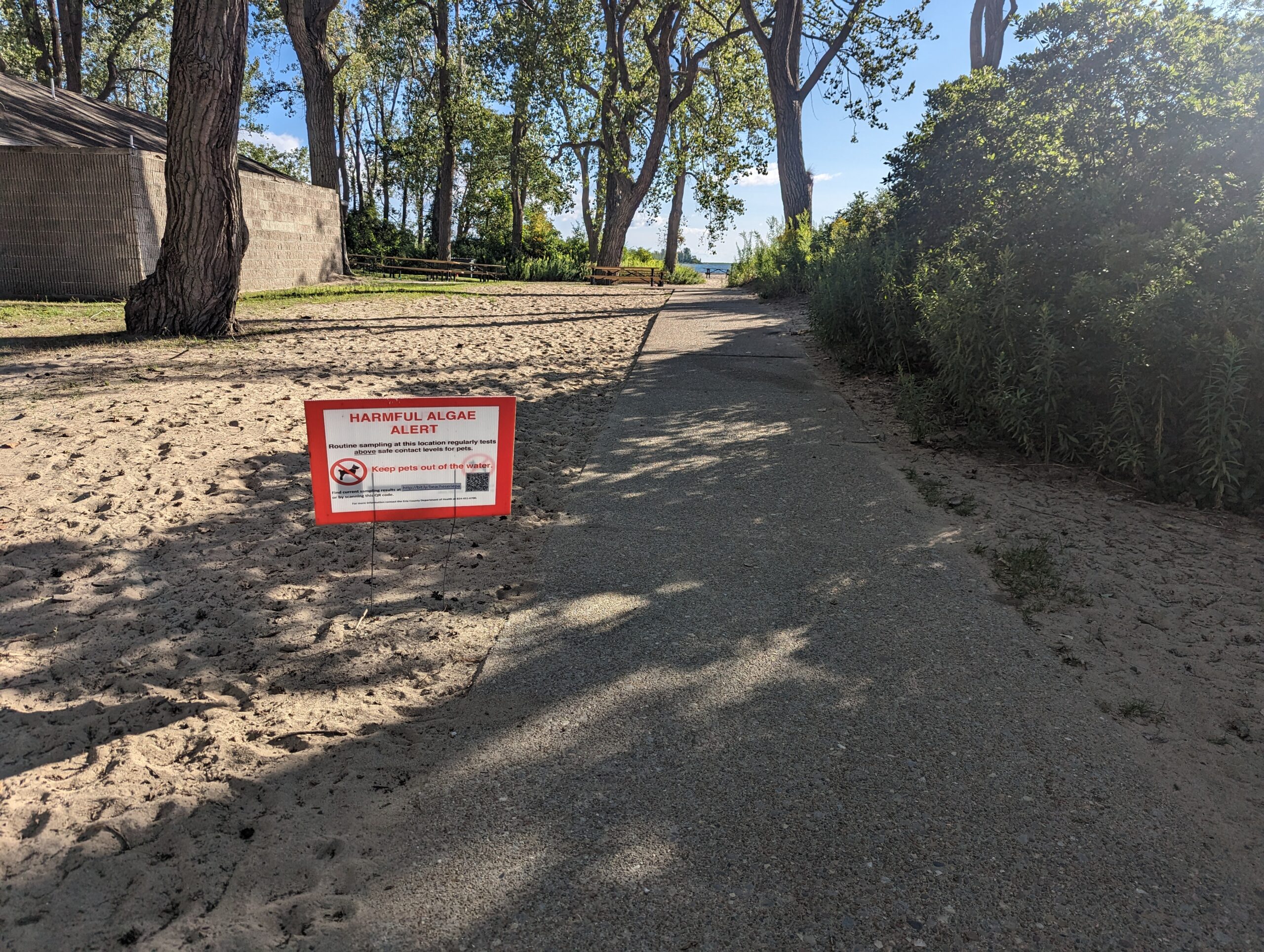 Signage showing unsafe HAB toxin levels for dogs at Beach 11 in 2023.
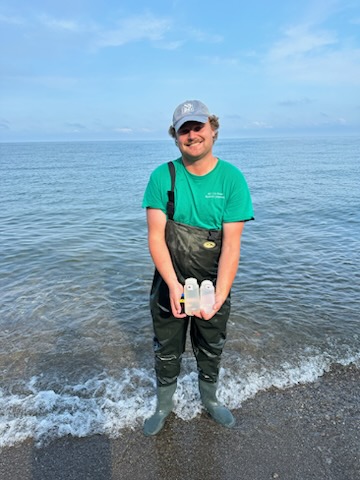
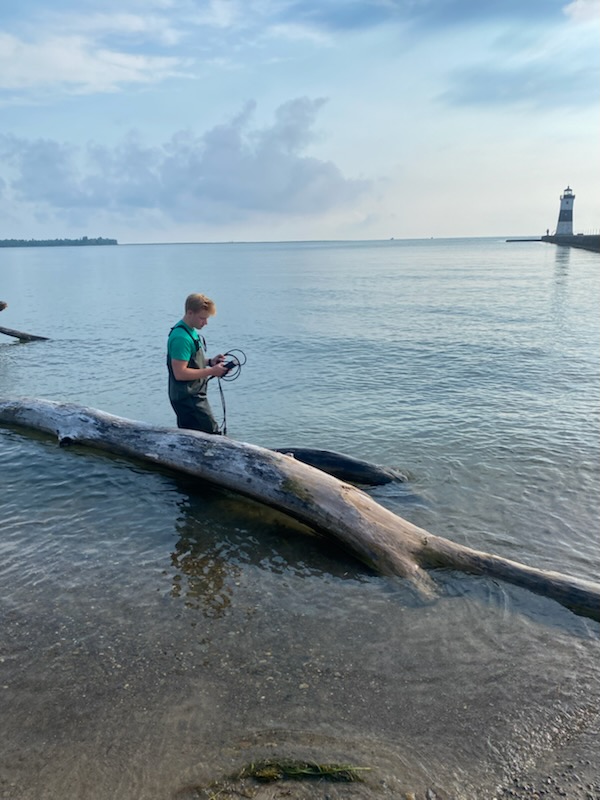
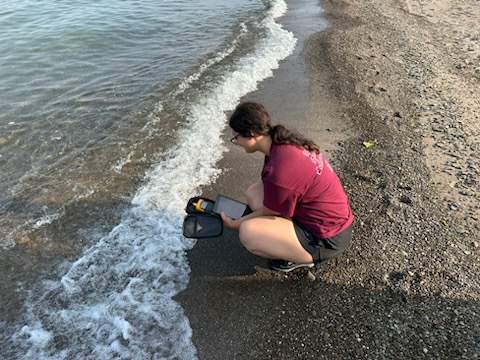
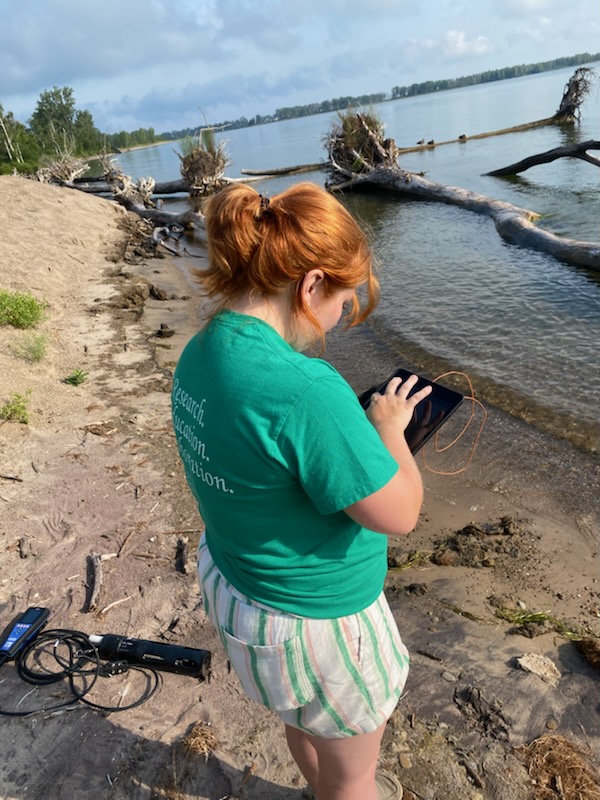 RSC Seasonal Interns collecting water samples for HAB testing.
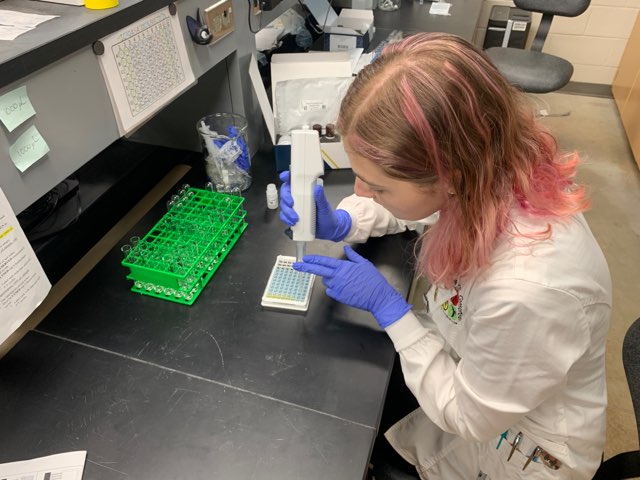
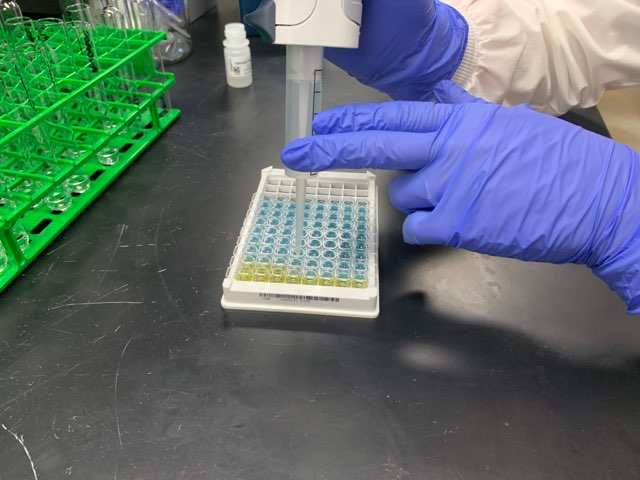 RSC Aquatic Biologist, Sarah Magyan, conducting an ELISA test to determine HAB toxin levels from water samples.
How dangerous are HABs?
Humans, pets, livestock, and wildlife that come into contact with or ingest HAB toxins can experience sickness, paralysis, or even death.
Know the signs of HAB poisoning:
Humans:
- rashes, blisters hives
- eye and nose irritations
- diarrhea, vomiting, abdominal pain
- numbness of lips, tingling in fingers and toes, dizziness, and headache
Pets, livestock, wildlife:
- staggering, difficulty breathing, convulsions, salivation, weakness, and vomiting
What should I do if I see a HAB?
- Stay out of water with floating film or scum
- Don’t let children or pets play in shoreline scum
- After swimming or wading in water, even with no visible HABs, rinse off with fresh water as soon as possible
- NEVER swallow untreated surface water.
- it may contain algal toxins or other bacteria, parasites, or viruses that could cause illness if consumed
- Do not let pets lick or eat HAB material from their fur
- Don’t drink or cook with suspect water
- treatments like boiling, chlorine bleach or water filtration units offer no protection from HAB toxins!
- See a doctor if you are your children might be ill from HAB toxins.
- Contact your veterinarian for sick pets
What about fishing and other activities?
Consume minimal amounts of fish fillets from water bodies with recent HAB events. Research indicates that toxin levels are highest in internal organs but can be found in fillets. At a minimum, remove the skin and wash fillets thoroughly before cooking; being sure not to use HAB affected water.
Other activities near the water such as camping, biking, picnicking, and hiking are safe. If you are picnicking, and have had contact with suspected water or shoreline debris, be sure to wash your hands before handling food.
If in doubt, STAY OUT!
Have fun on and in the water, but know that harmful algal blooms (HABs) are a global problem in lakes, rivers, and other water bodies. Knowing how to identify HABs and being alert can keep you, your family, and your pets safe!
Where can I report a bloom or find more information?
Report a bloom to:
The Pennsylvania Department of Environmental Protection (PADEP) at (814) 332-6839
For more information, visit PA Sea Grant and Erie County Department of Health